
HANGARKEEPERS LIABILITY?
Whether you simply want cover for your private hangar or liability insurance for your commercial activities within the aviation industry such as aircraft maintenance and airport support services let us advise you and make sure you are fully aware of the risks that you face. Moreover, we can provide a full and comprehensive service taking care of all your insurance requirements including business protection and any aircraft. Hangarkeepers Liability insurance provides coverage for three areas of cover being.
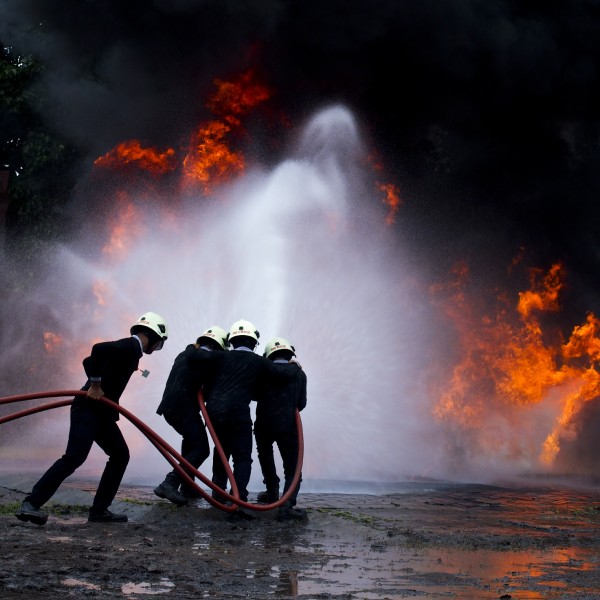
Aviation businesses that may require hangarkeepers liability:
- Owners or occupiers of airfield hangars used predominantly for the storage of aircraft.
- Owners and occupiers of hangars and/or airfield premises used for commercial purposes.
- Airfield/Landing strip owners
- Owners or occupiers of airfield hangars used predominantly for the storage of aircraft.
- Owners and occupiers of hangars and/or airfield premises used for commercial purposes.
- Airfield/Landing strip owners
- Avionics Technicians
- Aircraft Paint shops
- Aircraft Refuelers
- Licensed Aircraft Maintenance Engineers (L.A.M.E’s)
- Aircraft turnaround organizations
- Ground equipment supplies and maintenance
- Suppliers of food and beverages to airlines
- Contract Baggage handlers
Hangar Insurance
Our team of aviation brokers can provide you with advice in relation to your Hangar Insurance needs and/obtain both the most competitive premium and policy conditions from a range of reputable based insurers.
- Loss or damage to the physical buildings and/or contents, plant machinery and equipment.
- Loss of rent or business interruption cover
- Burglary & Theft
- Machinery & Electronic breakdown
- Glass & Transit

Hangarkeepers Liability Policy
Hangarkeepers Liability is a generic term used by the Aviation Insurance industry to describe a liability insurance policy. There are three sections available under a Hangarkeepers Liability policy in Australia. The type of business you operate will determine the extent of the liability risk you are exposed to, this in turn can be covered by all or some of the three sections.
Most businesses require Section 1 as a minimum. A brief description of the cover provided by each section follows:
Section 1
Section 1 provides cover for what is generally known as Public Liability. This covers you for amounts which you may be adjudged to pay to any person or persons as compensation in respect of: Bodily injury or death Loss of, or damage to the property of others caused by your negligence in the conduct of your business or any defect in your premises, plant or machinery used in the business.
Section 2
Section 2 provides cover for aircraft or aircraft components that are deemed to be in your care, custody or control or while being serviced maintained or worked on.
Section 3
Section 3 provides product liability cover for aircraft or aircraft components or goods that have left your care, custody or control or after they have been maintained, serviced or worked on.
Endorsements
Endorsements available to the standard wording include:
Cross liability
Tenants liability
Manufacturers recommended endorsement
Refuelers liability
Food & drink
What is NOT Covered
As with any insurance there are policy exclusions and limitation to coverage which are usually contained in the Insurer’s policy wording or may be imposed/applied by an Insurer.
Following are few major exclusions:
- liability for bodily injury to any person, who at the time of sustaining such injury is a director or employee of the Insured or partner in the Insured’s business whilst acting in the course of his or her employment with or duties for the Insured.
- liability for any part of a claim in connection with the entitlement of a worker or employee to compensation in respect of loss of income or earnings by reason of any workers’ compensation, employees’ compensation, accident compensation, occupational health, and safety or similar legislation other than a subrogation claim brought by an insurer to recover sums paid pursuant to such legislation, which is not otherwise excluded by this Policy
- the cost of making good any faulty workmanship for which the Insured, their employees, contractors or subcontractors may be liable (but this limitation shall not exclude resulting damage arising out of such faulty workmanship).
- liability assumed by the Insured by Agreement under any Contract unless such liability would have attached to the Insured even in the absence of such Agreement.
- Riots, Strikes, Civil Commotion, Civil Disturbances, War, Invasion etc.
And there are many others, please talk to us about what may or may not be appropriate for your coverage.
What Is Aircraft Liability and Hull Insurance?
Aircraft liability and hull insurance protects firms that use planes and other aircraft for business purposes. Aircraft aren’t covered under standard liability policies.
Many firms use airplanes, jets, or helicopters for business purposes. Some only use them occasionally for a special project or a business-related social outing. Others, like crop-dusting businesses and aerial mapping companies, use aircraft regularly.
Flying creates unique risks for businesses that own and use aircraft. Accidents can cause serious injuries or even death, and the aircraft and/or other property can be damaged or destroyed. Thus, insurance coverage for aircraft is so important.
Businesses that use aircraft shouldn’t rely on their commercial general liability (CGL) policy for protection. The standard policy contains a broad aircraft exclusion that eliminates coverage for most aircraft-related claims. [1]
To protect themselves, businesses should buy aviation insurance. There are two main categories of coverage: aircraft liability insurance and hull insurance, which covers physical damage to the aircraft. They can be purchased together or separately, and in a variety of iterations.
How Aircraft Liability and Hull Insurance Works
Aircraft policies from insurers most reputable Insurers cover third-party bodily injury and property damage claims against an aircraft owner or operator.
Aircraft Liability Coverage
The policies include three types of liability coverage:
- Bodily injury or death sustained by third parties other than passengers
- Bodily injury or death sustained by passengers
- Damage to property owned by third parties
These coverages may be purchased individually, with each form of coverage subject to a separate limit per occurrence. Alternatively, all three may be covered under one agreement subject to what’s known as a “smooth limit,” or a single combined limit per occurrence. [2]
If your insurer insists on a bodily injury sublimit, try to avoid a per person limit that may restrict payouts for people injured on the ground as well as passengers.
Opt instead for a “per-passenger” limit, which only limits coverage for passengers. A per-person limit means that you could be liable for costs if a nonpassenger is extensively injured and sues for damages beyond your policy limits.
For example, if a plane makes an emergency landing and collides with a vehicle, the driver of the vehicle is a non-passenger. Suppose your policy has a $1 million per occurrence limit and a $100,000 per person limit. In that case, it will only cover the driver’s injuries up the $100,000, and you’re responsible for any costs beyond that. If your policy has a $100,000 per passenger limit, any injured passengers would be subject to that limit, but the driver could be paid up to the per occurrence limit.
Liability Exclusions
Some risks may be excluded from aircraft liability policies. Common exclusions include:
- Bodily injury to employees
- Liability imposed under a workers’ compensation law
- Contractual liability, which is when you assume liability by signing a contract
- Injury or damage caused by the application of fertilizers or other substances (crop dusting)
- Injury or damage caused by pollution, noise, or electrical or electromagnetic interference [3]
Types of Aircraft Hull Insurance
To insure against physical damage to an aircraft, businesses need to purchase aircraft hull insurance. Many policies offer the following three coverage options:
- Ground and flight: Covers damage to the aircraft caused by any peril (including disappearance) not specifically excluded, whether the damage occurs when the aircraft is on the ground or in the air
- Not in flight: Covers damage that occurs while the aircraft is on the ground, whether stationary or in motion
- Not in motion: Covers damage that occurs while the aircraft is on the ground and stationary [4]
Hull coverage typically excludes damage caused by wear and tear, electrical breakdown, war and related perils (including terrorist acts), excessive heat (to the engine), hijacking, and confiscation by a government authority. [5] Both the not in flight and not in motion coverage options exclude damage caused by fire or explosion following a crash or collision that occurred while the aircraft was in flight.
Warranties
A warranty is a promise by an insured that certain requirements have been met. If the promise is broken, the insurer can void the policy. Aircraft policies contain warranties that are unique to the industry.
First, a pilot warranty states that the plane will be piloted only by the person named in the declarations or by someone who meets specific qualifications described in the policy. If the plane is piloted by someone else, the policy affords no coverage.
Similarly, an airworthiness warranty voids the policy if the insured aircraft doesn’t have a valid airworthiness certificate. Federal regulations prohibit the use of any aircraft that does not have a valid airworthiness certificate. [7]
A third type of warranty relates to how the insured aircraft is used. For example, Arch’s policy states that the policy is only valid if the aircraft is used for the stated purpose. Choices include pleasure and business, charter/taxi, and
commercial. [8]
IN SUMMARY:
WHAT IS INSURED?
Physical loss of or damage to your aircraft up to the agreed value stated in your policy schedule up to the sum insured stated in your policy schedule – if applicable.
- Malicious damage to your aircraft (vandalism) etc.
- Third party legal liability – Your legal liability to third parties for damages arising from the use of your
insured aircraft up to your selected liability limit as stated in your policy schedule. - Passenger/baggage legal liability – Your legal liability to passengers and their baggage arising out of the use
of your aircraft and non-owned aircraft – as applicable. - Airside Vehicle Liability – Your legal liability arising out of the use of any airfield or airport in connection
with the use of your Aircraft, including the use of vehicles on such airfield or airport. - Defence costs and expenses.
WHAT IS NOT INSURED?
- The applicable excess amount stated in your policy schedule.
- Wear and tear, deterioration, or mechanical breakdown.
- Loss of use of your aircraft or other consequential loss.
- Claims arising from War and Allied Perils, except as permitted by the policy.
- Claims arising from any hostile detonation of any weapon of war employing atomic or nuclear fission and/or
fusion or other like reaction or radioactive force or matter. - Road Traffic Act Liability.
- Illness, sickness or disease not caused by an accident covered by the policy.
ARE THERE ANY RESTRICTIONS ON COVER?
This Policy does not indemnify Loss to the extent below:
- Illegal use of the aircraft or use for any purpose not included in the policy schedule.
- Use of the aircraft outside the geographical limits stated in the policy schedule.
- Use of the aircraft into any country or region where such operation of the aircraft is in breach of
- United Nations or European Union sanctions.
- Piloting of the aircraft by persons not specified in the policy schedule.
- Carrying a greater number of passengers than the seat total stated in the policy schedule.
- The presence (or threatened presence) of asbestos
- Nuclear risks.
- Any computer failure relating to date recognition or date change.
As Insurance is a complex subject, please talk to us now for professional advice and to make sure your level of coverage is appropriate, adequate, and sufficient to your requirements.
The List of Risks or the range of insurances available is not exhaustive, if there are any particular risks that are possibly unique to your type of business and/or for any specific or special requirements, please seek our assistance and guidance.